

Western Lane Ambulance District Operational Levy Renewal - Ballot Measure 20-389
Frequently Asked Questions
What is being considered?
On November 3, 2026, voters in the Western Lane Ambulance District (District) will consider Lane County Ballot Measure 20-389, a five-year local option levy for ambulance operations.
The levy supports the personnel, vehicles, medical equipment, supplies, training, facilities, and other resources needed to maintain current emergency medical and ambulance service levels.
Is this a new levy?
No. This measure renews an existing local option levy first approved by voters in 2012 at the same exact rate. Because local option levies are limited to five years, voters must periodically decide whether to continue them.
The levy is scheduled to expire unless renewed by voters.
Would renewal increase my taxes?
No. If the measure renews the existing levy at the same rate, it would continue the current levy rather than add a separate levy on top of it. Property owners are already paying the existing rate, which will expire if it is not renewed.
Individual tax amounts can still change as assessed values change.
What services does Western Lane Ambulance District provide?
Western Lane Ambulance District provides permanent emergency medical services across approximately 564 square miles of western Lane County. As of July 1, 2026, the district was increased to 686 square miles. Services include:
- 24-hour emergency ambulance response
- Advanced Life Support paramedic care
- Emergency treatment and transportation
- Critical-care interfacility transportation
- Response to cardiac arrests, strokes, traumatic injuries, motor vehicle accidents, breathing emergencies, overdoses, rescues, and other medical emergencies
- Coordination with hospitals, air ambulances, fire districts, law enforcement, and neighboring emergency-service agencies
- Community CPR, first-aid, and injury-prevention education
- Mobile Integrated Healthcare and other community health programs, as funding and staffing allow
What are the District’s current service levels?
Western Lane Ambulance District currently provides around-the-clock ambulance coverage for Florence and surrounding communities, including Mapleton, Dunes City, Swisshome, Deadwood, and other areas within the district.
Current operations include:
- Three (3) advanced life support ambulances staffed and available during normal daily operations
- A minimum daily staffing level of six (6) personnel
- Approximately 5000 emergency medical calls annually
- Approximately 3700 ambulance transports annually
- Critical-care paramedics capable of transporting seriously ill patients from PeaceHealth Peace Harbor Medical Center to regional hospitals
- Mutual-aid response to and from neighboring agencies when resources are available
Service levels may vary when multiple emergencies occur simultaneously, personnel are unavailable, or ambulances are transporting patients outside the area.
What does the levy pay for?
Levy revenue is used for ambulance operations, including:
- Paramedics, EMTs, and supporting emergency personnel
- Maintaining 24-hour emergency response coverage
- Ambulance replacement, maintenance, fuel, and repairs
- Medical equipment, medications, and disposable supplies
- Emergency communications and dispatch costs
- Training, certification, and continuing medical education
- Insurance and regulatory compliance
- Station and operational expenses associated with providing ambulance service
- Maintaining advanced and critical-care medical capabilities
Levy funds are not intended for unrelated city, county, or state programs.
Why are ambulance transport fees not enough to pay for the service?
Ambulance charges are an important source of revenue, but they do not cover the full cost of maintaining a 24-hour emergency response system.
The district must remain ready to respond regardless of how many calls occur, whether a patient is transported, or whether the full cost of service can be collected. Medicare, Medicaid, private insurance, and uninsured patients reimburse ambulance services at different rates, and payments are frequently well below the actual cost of providing care.
Transport revenue also does not fully account for readiness costs such as staffing, training, vehicles, medical equipment, stations, dispatch, and responses that do not result in transportation.
Why is the levy being renewed now?
The existing levy is approaching expiration. At the same time, the cost of maintaining ambulance service has increased because of:
- Higher personnel and benefit expenses
- Rising ambulance, fuel, repair, and equipment costs
- Increased prices for medications and medical supplies
- Greater insurance, dispatch, and regulatory costs
- Increasing emergency-call demand
- Longer out-of-area transports that can leave local resources unavailable
- The need to replace aging ambulances and medical equipment
Renewal would provide a dedicated revenue source to help maintain the District’s current level of service for another five years.
Estimated Cost to Property Owners
Property taxes are calculated using a property’s assessed value, not its real market value. Assessed value appears on the annual property-tax statement and is often lower than the property’s estimated selling price.
At a rate of $0.45 per $1,000 of assessed value, the estimated cost would be:
| Assessed property value | Estimated annual cost | Estimated monthly equivalent |
|---|---|---|
| $100,000 | $45.00 | $3.75 |
| $150,000 | $67.50 | $5.63 |
| $200,000 | $90.00 | $7.50 |
| $250,000 | $112.50 | $9.38 |
| $300,000 | $135.00 | $11.25 |
| $400,000 | $180.00 | $15.00 |
| $500,000 | $225.00 | $18.75 |
To estimate your cost: Divide your property’s assessed value by 1,000 and multiply the result by $0.45.
Example: $250,000 ÷ 1,000 × $0.45 = $112.50 per year.
These figures are estimates. Actual taxes may be affected by Oregon property-tax limitations, compression, exemptions, and other factors.
Average waste disposal pickup for a household: $150-200 every few months.
How long would the renewed levy remain in effect?
The levy would remain in effect for five years, beginning with the [2027–28] tax year and continuing through the [2031–32] tax year.
After five years, the levy would expire unless voters approved another renewal.
How long would the renewed levy remain in effect?
The levy would remain in effect for five years, beginning with the [2027–28] tax year and continuing through the [2031–32] tax year.
After five years, the levy would expire unless voters approved another renewal.
How much revenue is the levy expected to generate?
The levy is estimated to generate:
| Fiscal year | Estimated revenue |
|---|---|
| 2027–28 | $1,258,044 |
| 2028–29 | $1,295,785 |
| 2029–30 | $1,334,659 |
| 2030–31 | $1,374,699 |
| 2031–32 | $1,415,940 |
| Five-year total | $6,679,137 |
These are estimates based on information available when the measure was prepared. Actual collections may vary because of changes in assessed value, collection rates, and property-tax compression.
What would happen if the levy is renewed?
Renewal would provide funding intended to maintain current ambulance service levels and support:
- 24-hour emergency ambulance availability
- Existing paramedic and EMT staffing
- Current emergency response and transport capabilities
- Critical-care ambulance transportation
- Replacement and maintenance of ambulances and medical equipment
- Training and certification of emergency personnel
- Continued ability to respond to simultaneous emergencies. The current level of service consistently meets required emergency response times.
Renewal is intended to maintain existing services; it does not guarantee that an ambulance will always be immediately available. Major incidents, overlapping calls, staffing shortages, and long-distance patient transports can still affect resource availability.
What could happen if the levy is not renewed?
If the levy is not renewed, the levy will expire and the district will lose approximately $1,258,044 annually, representing approximately 30% of its operating revenue.
The Board of Directors would then be required to determine how to balance the district’s expenses with its available revenue. Depending on the size of the funding loss, possible effects could include:
- Reduced paramedic and EMT staffing
- Fewer ambulances available during portions of the day
- Increased reliance on overtime or callback personnel
- Longer waits when multiple emergencies occur. The current level of service consistently meets all required emergency response times.
- Greater dependence on mutual aid from neighboring agencies
- Delayed ambulance and medical-equipment replacement
- Reductions in training, prevention, and community health programs
- Changes to critical-care or interfacility transportation capacity
- Increased use of financial reserves until those funds are no longer available
The exact reductions would be determined through the district’s public budget process. A “no” vote would not immediately eliminate all ambulance service, but the district would have substantially less revenue available to maintain its present operations.
Can neighboring agencies provide coverage if a local ambulance is unavailable?
Western Lane Ambulance District participates in mutual-aid agreements with neighboring emergency-service agencies. However, mutual aid depends on whether those agencies have personnel and equipment available at that time.
Because of western Lane County’s geography and travel distances, an ambulance responding from outside the area may take significantly longer to arrive. Mutual aid is an important backup, but it is not a guaranteed replacement for locally available resources.
Does the levy pay for fire protection?
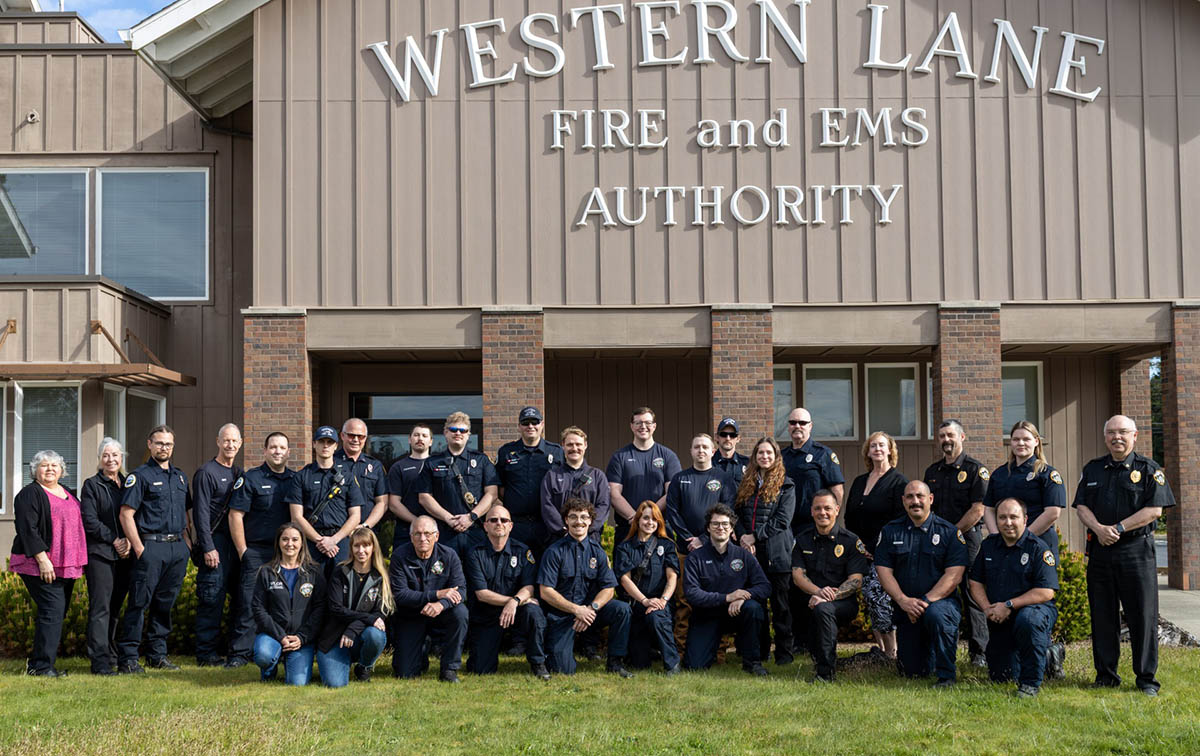
The Western Lane Ambulance District levy is dedicated to ambulance and emergency medical operations. Siuslaw Valley Fire and Rescue and Western Lane Ambulance District are separate taxing districts, although their services are administered cooperatively through Western Lane Fire and EMS Authority.
This cooperative model allows personnel, facilities, equipment, and administrative resources to be coordinated where legally and operationally appropriate. This partnership has allowed both districts to share resources and personnel to keep the current operational levy the same since 2012.
Does paying property taxes eliminate ambulance bills?
No. The levy helps pay for the readiness and operating costs of maintaining the ambulance system. Patients may still receive a bill when ambulance treatment or transportation is provided.
Ambulance billing depends on the services provided, insurance coverage, Medicare or Medicaid requirements, and other applicable rules. Information about the district’s LifeMed membership program is available separately.
Are renters affected by the levy?
Property taxes are billed directly to property owners. Renters do not receive a separate property-tax bill for the levy, although property taxes may be one factor considered by property owners when establishing rental costs.
All residents and visitors within the district may receive emergency ambulance assistance when needed, regardless of whether they own property.
Will emergency care depend on a person’s ability to pay?
No. Emergency responders provide medically necessary assessment, treatment, and transportation without first determining whether a patient can pay.
Billing and insurance matters are addressed after emergency care is provided.
How will the public know how levy funds are used?
Western Lane Ambulance District adopts its budget through Oregon’s public budget process. Budget documents, audits, Board meetings, and financial reports are available for public review.
The district can also publish an annual levy accountability report showing:
- Revenue received
- Personnel supported
- Emergency calls and transports
- Ambulance availability
- Major equipment and vehicle purchases
- Reserve levels
- Progress toward stated service commitments
Who decides how levy funds are spent?
The elected Western Lane Ambulance District Board of Directors oversees district finances and approves the annual budget through a public process. Expenditures must comply with the adopted budget, applicable Oregon law, financial policies, and auditing requirements.
Where can I find my property’s assessed value?
Your assessed value is listed on your Lane County property-tax statement. It can also be obtained through the Lane County Assessment and Taxation property-information system.
Use the number labeled assessed value, rather than real market value, when estimating the levy cost.
Where can I get additional information?
Additional levy information, financial documents, meeting schedules, and district contact information are available at:
Western Lane Fire and EMS Authority
2625 Highway 101 Florence, Oregon 97439
Phone: 541-997-3212
Website: www.wlfea.org
Email: info@wlfea.org
For official election information, ballot deadlines, and voter registration information, contact Lane County Elections.
Western Lane Ambulance District provides this information to explain the measure and its potential financial and service effects. The district does not advocate for or against the measure. Voters are encouraged to review the official ballot title and explanatory statement before voting.